


Pillar page
Marketing attribution in Malaysia: from last-click to something useful
Last-click attribution is the default in most Malaysian dashboards because it is easy, not because it is correct. This guide walks through the practical models teams should consider, what each is good for, and how to move past the false comfort of a single number that credits one touchpoint.
Why attribution matters now
Media budgets in Malaysia are increasingly split between Meta, Google, TikTok, programmatic, influencer, and offline. Each platform reports its own conversions, often the same conversion, leading to double counting and misallocation of budget. Attribution is the discipline of telling one consistent story across all of them.

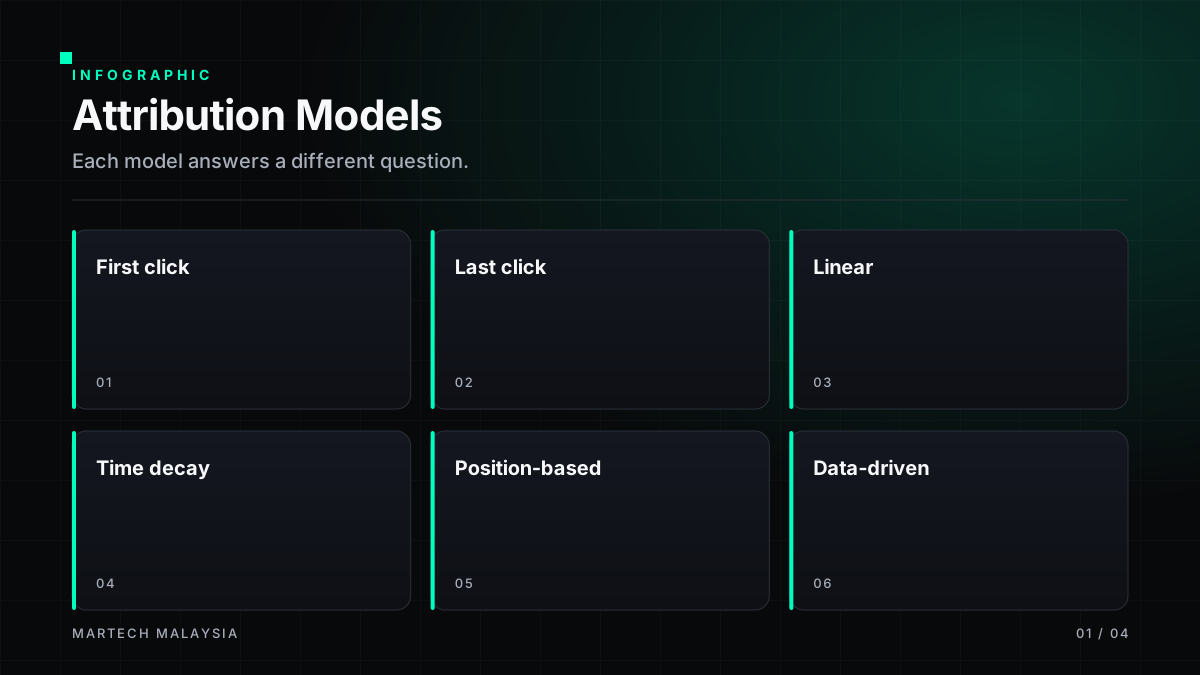
The main attribution models, in plain English

Why last-click survives despite being wrong
It is the default in Google Analytics and Meta. It is easy to defend to a finance team. And it makes performance channels look great, which is convenient for the people running them.
Marketing Mix Modeling (MMM) is back
With cookie-based tracking degrading, MMM is making a comeback for top-down budget decisions. Tools like Meta's Robyn and Google's Meridian let mid-sized Malaysian brands build credible mix models without enterprise budgets.
- Uses aggregated weekly or daily spend and revenue data
- Does not depend on individual user tracking
- Captures offline, OOH, and brand effects digital attribution misses
- Useful for budget allocation, less useful for daily optimization

Incrementality testing: the closest thing to truth
Geographic holdouts, ghost ads, and conversion lift tests let you measure causal impact. They are operationally heavier, but the insights are not opinion, they are evidence.
- Pick a channel that consumes a meaningful share of budget
- Define matched test and control geographies or audiences
- Hold spend constant for 2 to 4 weeks
- Compare actual outcomes to a baseline forecast

A practical attribution stack for Malaysian brands
| Layer | Tool examples | Use |
|---|---|---|
| Event capture | GA4, GTM server-side, CDP | Track touchpoints across channels |
| Multi-touch model | GA4 data-driven, custom warehouse model | Daily channel and campaign decisions |
| Mix model | Robyn, Meridian, in-house | Quarterly budget allocation |
| Incrementality | Meta Conversion Lift, geo tests | Validate paid media impact |
Consent-aware attribution
Consent rates in Malaysia are improving but still inconsistent. Build attribution models that work with the data you can collect under PDPA, not the data you wish you had. Server-side tracking, consent mode, and modeled conversions from Meta and Google help fill the gap responsibly.
Reporting that drives decisions
- Pair each channel's platform-reported conversion with a single source-of-truth dashboard
- Show the same metric in multiple models so the team sees the spread
- Document model assumptions so future analysts understand the choices
- Review allocation monthly, not weekly, to avoid noise-chasing
Common mistakes
- Adding up Meta, Google, and TikTok conversions and reporting the sum
- Switching attribution models every quarter to chase a flattering number
- Relying entirely on platform-reported lift studies
- Ignoring brand and offline effects entirely
Frequently asked questions
What model should a small Malaysian brand start with?
GA4 data-driven attribution plus quarterly geo tests on the largest channel. That is enough to make meaningfully better budget decisions.
Do I need a warehouse for this?
Eventually yes. A warehouse lets you join paid media spend, web behavior, CRM, and revenue into one model you control.
How often should I rerun MMM?
Quarterly for budget planning. More often if a major channel shift or seasonality event distorts past data.
Can I trust Meta's lift studies?
Use them as one input, not the final answer. Independent geo tests are the cleanest validation.
Where to go next
Attribution is never perfect. The goal is not the right number, it is a defensible point of view that improves budget decisions. Pick a model, stick with it long enough to learn, then refine.
If you want a second opinion on your setup, reach out to cann@martechmalaysia.com or book a diagnostic.
Sources & further reading
- Google. Data-driven attribution in GA4.
- Meta. Conversions API overview.
- Google. Server-side Tag Manager documentation.
- MarTech Malaysia. Server-side GTM implementation guide.
Sources retrieved 17 July 2026.